
Trampoline buying guide for North Texas yards
I have owned more than a dozen trampolines, and I will point you to the brand that fits your family, sometimes one I don't sell.
- Written for North Texas yards
- 5.0 from 237 Google reviews
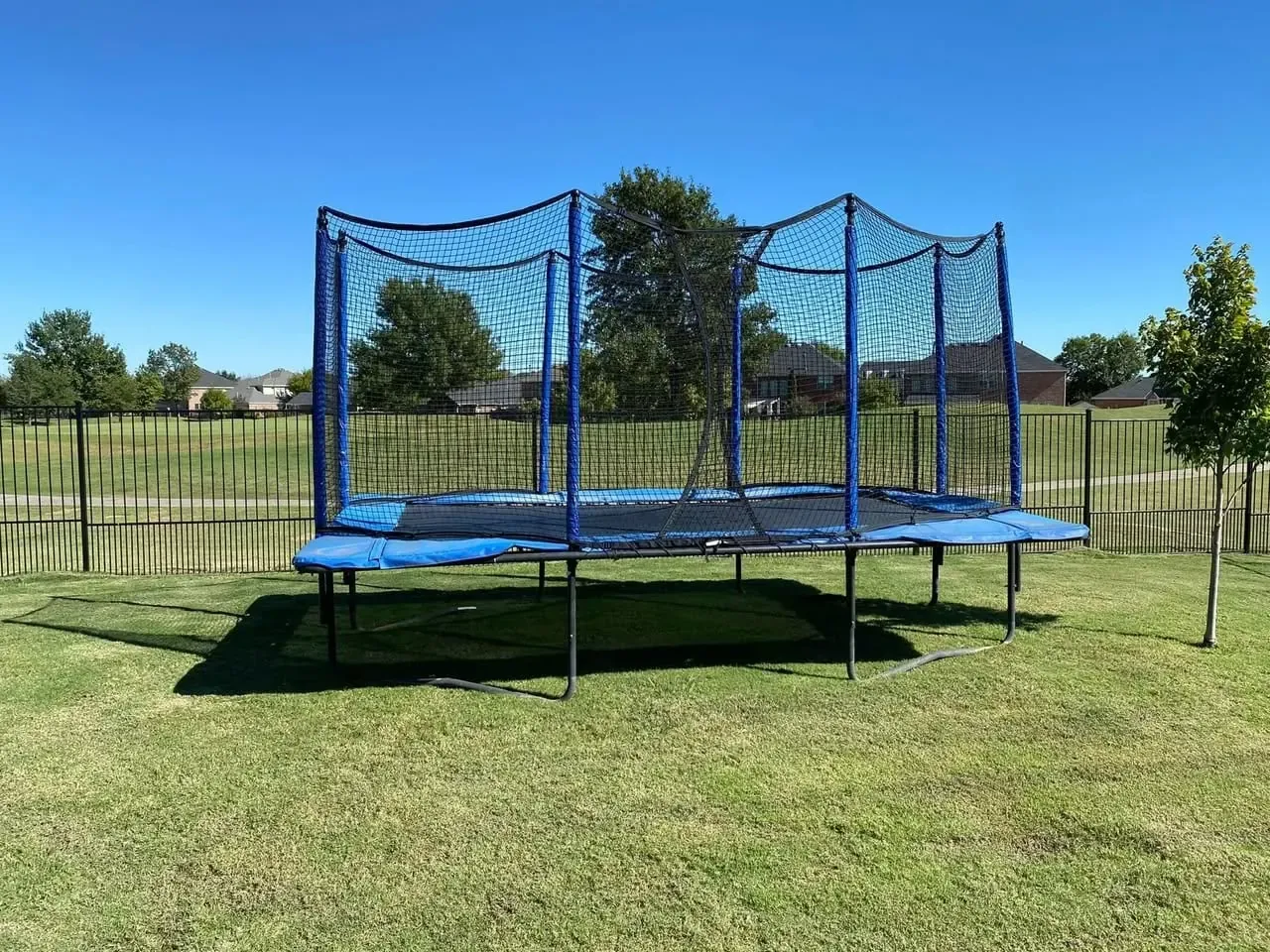
Measure the yard first: makers ask for 5 to 6 ft of clear space on every side and 24 ft of clear height. Pick the shape next: a round suits most families, a rectangle suits athletes. Then check the weight. A 15 ft round under 200 lbs and one at 335 lbs are different products. Or text me a photo of the yard and I'll tell you what fits.
- 24 ftClear height above the ground that Skywalker, Acon and Springfree each ask for
- 5 to 6 ftClear space on every side: Springfree asks for 5 ft, Acon for 6
- $1,649 to $4,449My range for a rectangle with a net, delivered and built, plus tax
The brands I sell or build, side by side
Warranty terms are each maker's own published terms. Prices are mine, plus tax, where I sell the brand.
| Brand | What it is | Maker's warranty | My price |
|---|---|---|---|
| Skywalker | 15 ft round with the net at the mat edge | 3 years frame, 1 year the rest | Not sold. Assembly only, quoted by text |
| Zupapa | Rounds from 8 to 15 ft, 108 springs on the 15 | 10 years frame, 2 years soft parts | Not sold. Assembly only, quoted by text |
| JumpKing | Mid-market rounds and rectangles | 1 year frame and mat, 90 days net and springs | 14 ft from $379 delivered. 10 x 16 is $1,649 built |
| Acon | Air 15 ft round: 335 lb, 110 springs | 10 years frame, 5 years mat and springs | Air 15 ft from $1,749 built |
| AlleyOOP | Net outside the frame, sold through dealers | Lifetime on the frame | Not sold. Repairs and moves quoted by text |
| Springfree | No springs, one jumper up to 220 lb | 10 years on every part | From $2,048 built |
| Akrobat, Avyna, North, Capital Play | Inground frames with the wall attached | Akrobat: lifetime frame, 12 years springs | $7,409 to $10,348 installed in the ground |
Above-ground prices include the enclosure net. I also sell Zero Gravity, and price it by text. Stock changes week to week, so text me the size for a firm price.
Rather not do it yourself? Text me a photo and I'll text back a firm price.
Size it by the yard first, then by the kids
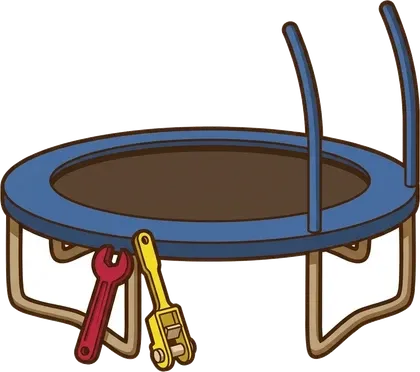
A trampoline's size is the frame, so a 15 ft round needs more than 15 ft of yard. Acon tells buyers of its 15 ft round to leave at least 6 ft clear on every side, which makes a 27 ft circle. Springfree asks for 5 ft all round, so its 11 ft square needs a 21 x 21 ft space. Both makers, and Skywalker in its manuals, ask for 24 ft of clear height above the ground. Look up for tree limbs and wires before you look at prices.
Then buy the bigger size that fits. No child has ever complained that theirs is too large. The sizes I install most are the 10 x 17, 12 x 17 and 9 x 15 rectangles, the 14 to 15 ft rounds and the 12 ft round, which is the one for a small yard or small jumpers.
Plenty of the families I build for have little ones, so here is what the guidance says, plainly. The American Academy of Pediatrics advises against home trampolines and says children under 6 should not jump, and Skywalker's manuals say a trampoline over 20 inches tall is not recommended under 6. If you have young kids, read the age line in your manual. The steps that matter most are the same ones the AAP and the makers list: one jumper at a time, no flips, a net and pads in good shape, and an adult watching.
Round, rectangle or springless
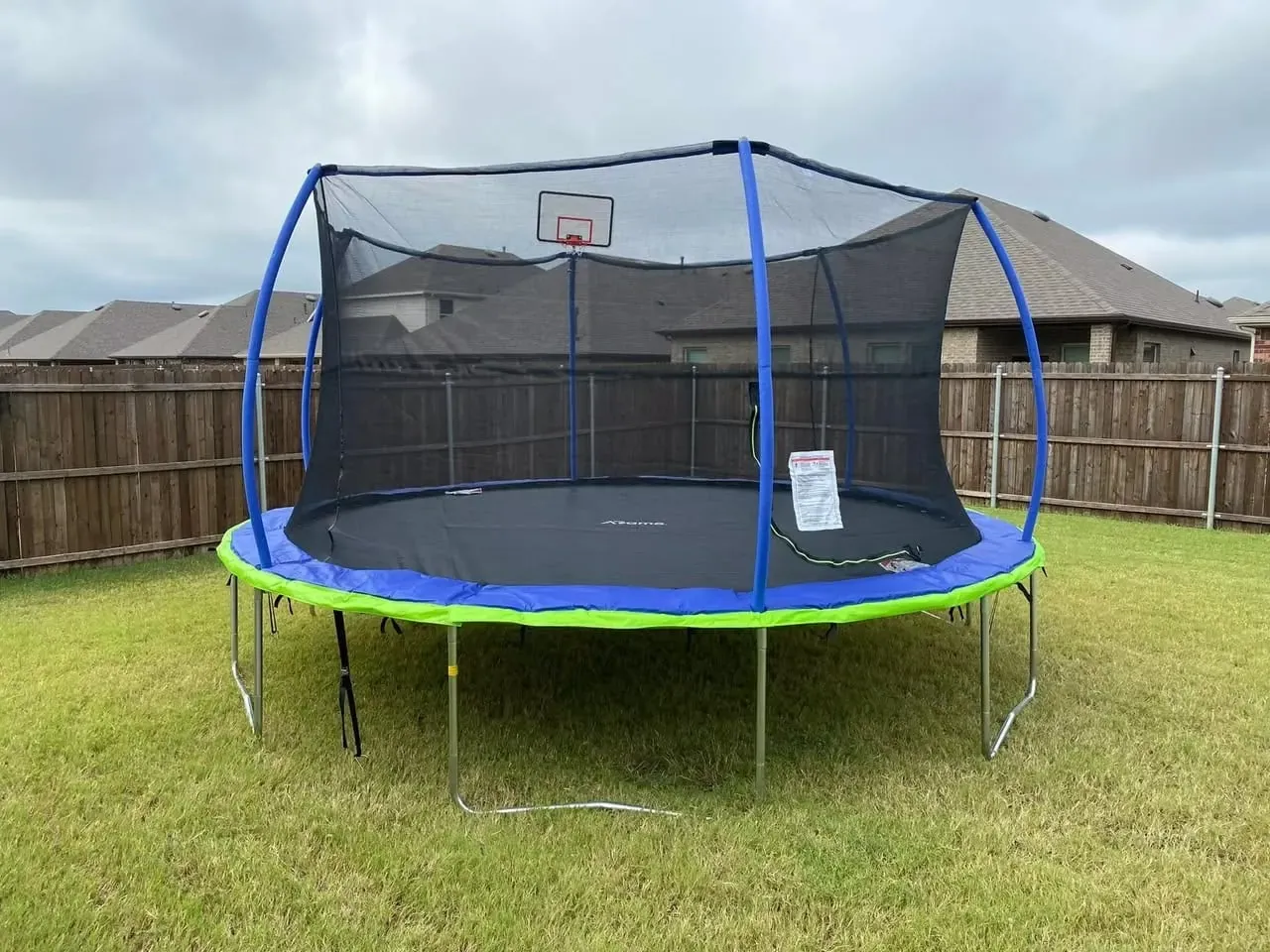
I sell more rounds than rectangles. The springs pull the bounce toward the middle, which keeps casual jumpers centered. Gyms and parks use rectangles because the bounce is higher and more even. Buy one for a gymnast, a cheerleader or a teenager who has outgrown a round. My rectangles with a net start at $1,649 delivered and built.
A narrow yard can decide for you. A 9 x 15 fits beside a house where a 15 ft circle cannot. Octagons bounce well because they behave like several rectangles laid over each other, though few makers build them. I am wary of ovals: many are a round stretched longer, and the bounce is uneven.
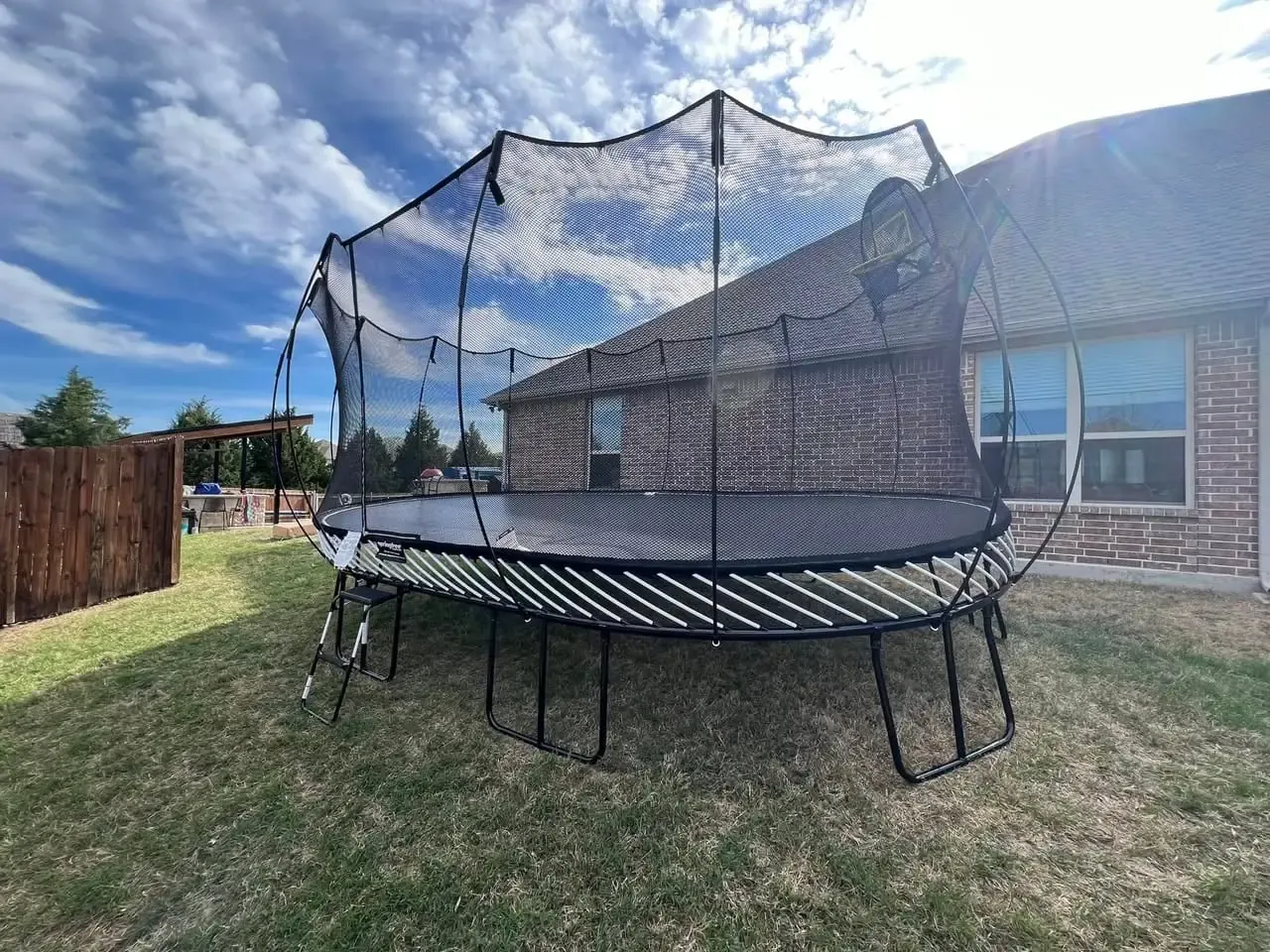
Springless means Springfree, where fiberglass rods under the mat do the work and there is no steel at the edge of the mat. The materials are good, but it bounces less than a good spring trampoline, the net leans in so the usable room is smaller than the size suggests, and Springfree rates every model for one jumper at a time. I recommend it for younger kids and steer teenagers to a rectangle.
What separates a $400 trampoline from a $2,000 one
Start with the weight, because steel is the expensive part to make and ship. A 14 or 15 ft trampoline under $500 can weigh less than 200 lbs. Acon lists its Air 15 ft at 335 lb, and a dealer spec sheet puts the AlleyOOP 10 x 17 with PowerBounce at 653 lb. Few makers print the wall thickness of the frame tube. Avyna does, at 11 gauge on its 10 x 17. For the rest, the weight tells you most of what the gauge would.
Spring count alone can fool you. Skywalker's 14 ft Epic has 96 springs and a 15 ft Zupapa has 108, close to the 110 on the Acon Air 15 ft. Compare length instead: Acon's are 8.5 inches, the AlleyOOP rectangle runs 9.25 inch springs and the Acon HD rectangles run 10 inch. Short springs are why America's most popular 15 ft round is not very bouncy.
On the mat, look at the sewing and how it meets the springs. Acon lists ten rows of stitching on the Air 15 ft. Better mats hold their steel V-rings with looped straps. A grommet punched straight through the fabric is the weak design, and that is where cheap mats tear first.
Warranty and parts show the price gap in year three. Skywalker gives 3 years on the frame and 1 year on everything else, weather damage excluded. JumpKing gives 90 days on the net and springs. Acon gives 10 years on the frame and says it will keep spare parts for the life of the trampoline, and AlleyOOP covers the frame for life. Cheap ones wear out over a few summers, and by then the question is if anyone still sells the part.
Above ground or in the ground
Above ground is the common choice and by far the cheaper one. It moves house with you and it can be anchored. The most I charge for one is $4,449 for the Acon X, delivered and built.
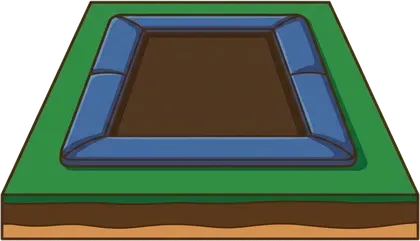
An inground trampoline is a construction job. The 12 x 17 is a common inground size now, and the largest made today are the 15 x 15, the 17 x 12 and the 18 x 12. My turnkey installs in Dallas–Fort Worth run $7,409 to $10,348 plus tax, and most are one day on site. You get no ladder, no fall from height off the side, nothing for the wind to take, and a trampoline adults will step onto. In November 2024 I swapped the 10 x 17 rectangle in my own yard for an inground Akrobat, and my family uses it far more.
Two things I will not build. I will not put a trampoline in the ground without a sump pump, because North Texas clay holds water and a pit without one becomes a pond. And please do not ask me to bury a $300 trampoline: the frame rusts, the pads weather fast and the hole needs a retaining wall built from scratch. Above ground, I will not set one on a slope where it is going to rock or walk.
Wind and anchoring, briefly
A trampoline with a net is a sail, and this is open country. A 500 lb trampoline is a whole lot harder for a storm to relocate than a 150 lb one, and the open weave of the AlleyOOP net lets wind pass through. Heavy is still not held down. Skywalker's manuals say even an anchored trampoline can become airborne, and Acon recommends four anchors in an open or windy yard. My crew adds four coil anchors with straps for $75 when we build one.
Questions people ask next.
Don't see yours? Text it to me or try the full list of 60.
How much yard do I need for a trampoline?
Add 10 to 12 ft to the frame size each way, plus 24 ft of clear height. Springfree asks for 5 ft clear, Acon for 6 ft. A 15 ft round by the Acon figure needs a 27 ft circle clear of fences, sheds, limbs and play equipment.
What are the top trampoline brands?
I sell Acon, Akrobat, Avyna, North, Springfree and Zero Gravity, plus JumpKing in the middle of the market and Capital Play for inground. AlleyOOP and JumpSport are good trampolines I now repair and move but no longer sell. The right brand depends on the yard, the kids and the budget.
What is the best outdoor trampoline for most families?
For most families, a 14 or 15 ft round with the net mounted outside the frame. Acon, Avyna, North and Texas Trampolines build them that way, which gives the kids waiting a turn somewhere to sit. A gymnast or a teenager will not outgrow a 10 x 17 rectangle.
What size trampoline is right for young kids?
A 12 ft round suits younger kids and smaller yards, and a round keeps the bounce in the middle. Check the age line in the manual before you buy. Skywalker says its full-height trampolines are not recommended under age 6, and the American Academy of Pediatrics advises that children under 6 should not jump. With little ones, keep it to one jumper at a time and an adult watching.
Is a cheap trampoline safe?
Most trampolines are sound the day they are built. Under $400, expect a stretched mat, a bent frame or a frayed net within a few seasons. I cannot promise that any trampoline is safe, at any price. One jumper at a time and no flips do more than any feature.
Should I buy a trampoline with the net inside or outside the frame?
Outside, if the budget allows. With the net at the mat edge, a 15 ft frame gives about 13 ft of jumping room and the pad only helps at the doorway. A net outside the frame makes the whole mat usable and turns the pad into a place to wait.
Takes about a minute
Get my price
A few taps and you'll see a real number wherever I publish one. No home visit to find out.