
Inground trampolines in North Texas clay: drainage, walls and what goes wrong
A trampoline pit is a hole in clay that will not let water through, so here is how to get water and air back out.
- Written for North Texas yards
- 5.0 from 237 Google reviews
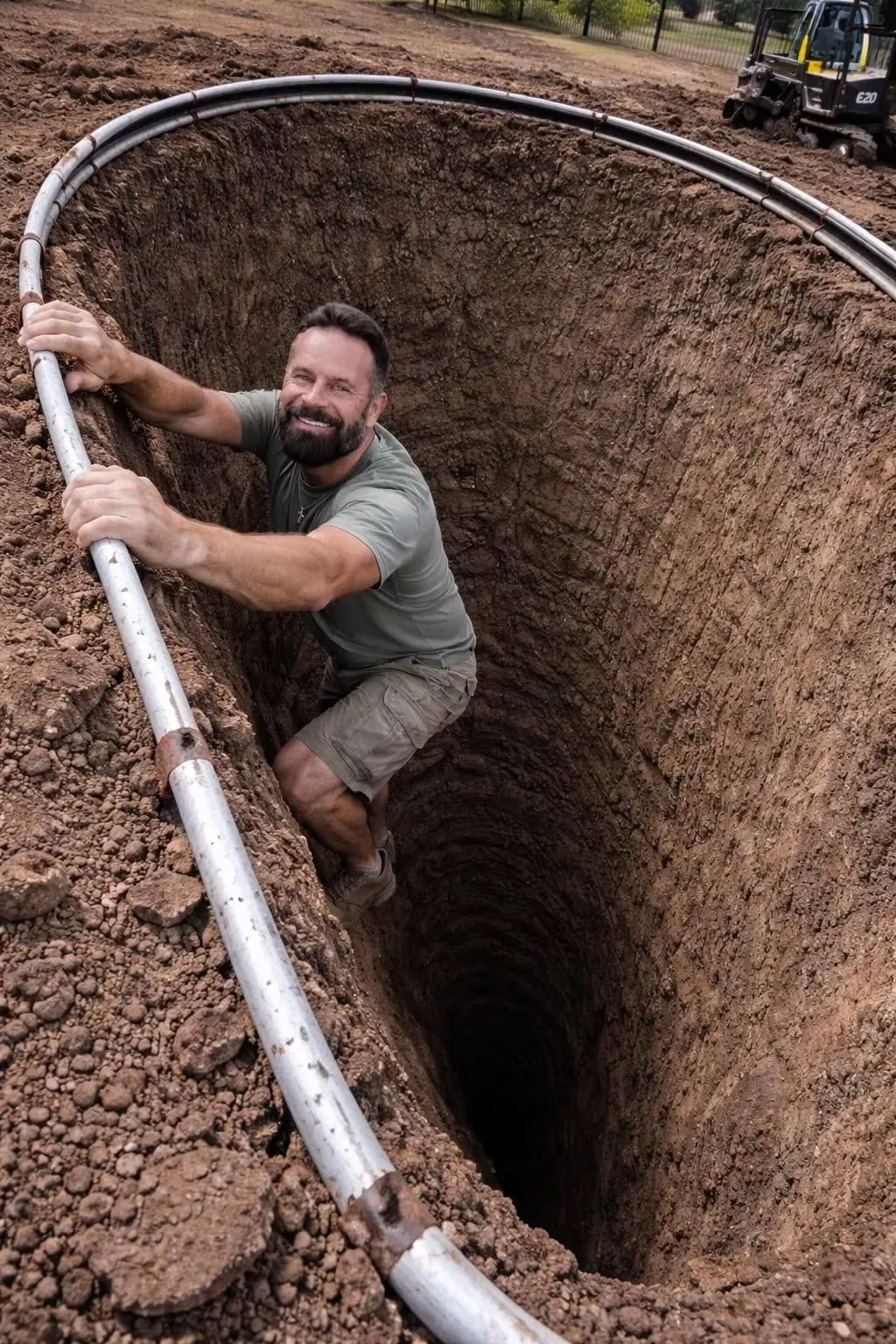
Blackland Prairie clay lets water through very slowly, so an inground trampoline pit dug in it collects rain and keeps it. Gravel alone will not empty it. The pit needs a pipe to lower ground or an electric sump pump, a retaining wall and a way for air to escape under the mat. Or text me a yard photo: every pit I build gets a pump.
- Very slowhow the USDA rates water moving through Houston Black, the Blackland Prairie clay
- 0.5 to 4 inhow wide that clay cracks when it dries, to a foot deep or more
- 48 hoursthe notice Texas requires through 811 before a dig, at no cost
Three ways to get water out of a pit
These are the options one inground maker, North, lists for its own trampolines. The last column is how each one fares in clay.
| Option | What it is | In Blackland clay |
|---|---|---|
| Gravel sump | A pit about two feet square and two feet deep in the floor of the hole, filled with stone | Fills and stays full. North says clay drains much more slowly, and the USDA rates this clay very slow |
| Drain pipe to lower ground | A 4 inch pipe from the bottom of the hole to a lower point such as a ditch. No electricity | Works where the yard has a spot lower than the pit floor. Most flat lots do not |
| Electric sump pump | A submersible pump in the bottom of the hole on a float switch, with a trench for the cable and the outlet line | Works on a flat lot, because it lifts the water out. It is the one I put in every pit |
North describes its soakaway as approximately 600 x 600 x 600 mm, which is where the two feet comes from.
Before anyone digs
Run through this with your installer, or with yourself if you are the one renting the machine.
- Pick the trampoline first. The hole is dug to that model, typically 48 inches deep on my jobs, so get the dig specs before the first scoop
- Call 811 or file at texas811.org at least 48 hours ahead, more over a weekend or a legal holiday. On my jobs the homeowner makes this request and sends me the ticket number
- Find what 811 will not find for you: sprinkler lines, yard drains and low-voltage lighting wire. I reroute sprinkler lines as part of the job, and moving the main line costs extra
- Walk the path from the street to the spot. The machine needs a way clear of obstructions, and an air conditioning unit in the side yard, stairs or pool decking can block it. Where it cannot get through, hand digging is quoted by trampoline
- Decide where the water goes: a lower spot the drain line can reach, and an outdoor outlet within reach of the pump
- Decide where the dirt goes. Several yards come out of the hole, and most of my jobs reuse it on site
- Ask your HOA before a date is set. I help with the details and sizes they ask for
- If turf or new sod is planned for the same yard, the trampoline goes in first
Rather not do it yourself? Text me a photo and I'll text back a firm price.
What Blackland clay does with water
The black dirt under Rockwall and most of the east side of Dallas–Fort Worth is Blackland Prairie clay. The USDA describes its best-known soil, Houston Black, in three phrases that explain every wet trampoline pit I have seen: permeability very slow, runoff high, shrink-swell potential high. Rain runs across the lawn to the lowest place it can find, and you have just dug that place.
The same soil sheet says that when this clay dries it opens cracks half an inch to 4 inches wide that reach a foot deep or more. By a wet spring the clay is tight and full, and whatever lands in the pit sits there. A pit can stay dry all summer and hold water for weeks the next April. That is how people get caught.
Not all of Dallas–Fort Worth is this clay. Texas Parks and Wildlife describes Cross Timbers soil, on the Southlake side, as sandy or sandy loam, and the USDA sheet for a typical soil there shows fine sandy loam on top with clay underneath. The top digs and drains easier, but that clay layer can still hold water at pit depth, so those pits get a pump too. Under the middle of Dallas the surprise is rock: Austin chalk lies under a third to half of Dallas County.
Choosing the drainage
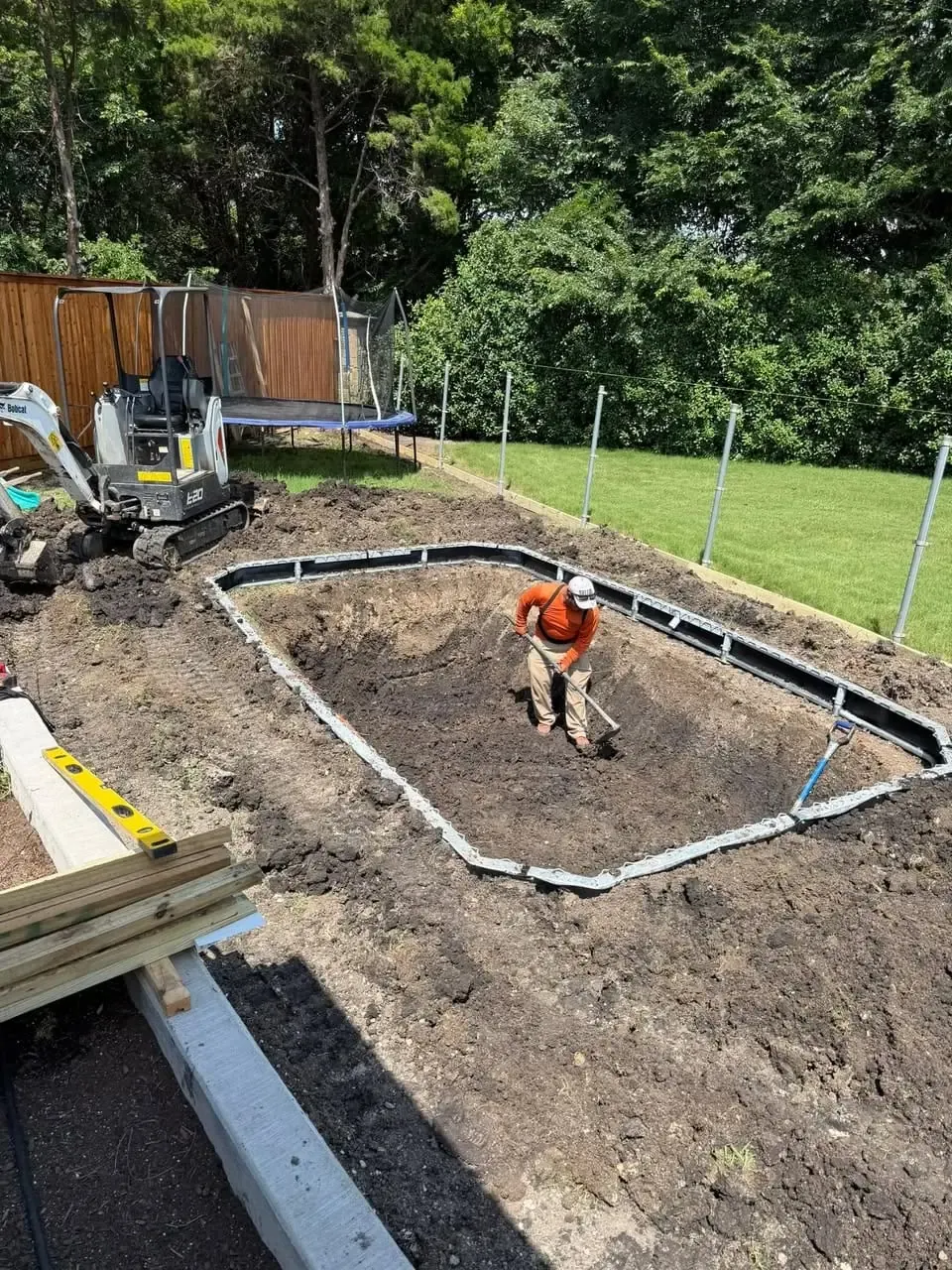
A gravel sump in clay is a bucket with rocks in it. It gives the water somewhere to collect below the frame, but it does not send the water anywhere. I lay a pea gravel base in every pit for that reason and never count on it as the drain.
A pipe that runs downhill to open air is the simplest drain there is, because nothing in it can fail. It needs an outlet lower than the pit floor. Where natural or gravity drain allows, with a proper drop in elevation, I run the pipe, and that can cost more when it means a longer trench. A flat lot has no drop, and a pipe laid level is just a longer bucket.
That leaves the pump, and in Texas we usually always use a sump pump or a drain. On my jobs every pit gets both, because I cannot warranty a pit without a pump inside it on continuous power. Mine sits in the bottom of the pit with a check valve, so the water cannot run back in, and a PVC line carries it where your yard can take it. The pump will wear out someday, so I set it in a corner I can reach by undoing that corner of the jump mat. My workmanship and the pump and drainage are under warranty for 1 calendar year. After that, pump work is quoted, and I replace pumps when one gives out.
Why walls cave, and what holds them
You have to have retaining walls to keep the dirt from caving in. Trampolines made for the ground come with the wall as part of the frame, a band of panels the backfill packs against. Put a regular trampoline in a hole and you are digging deeper and building that wall yourself.
Water is what brings a wall down. Standing water erodes the dirt behind and under it. Clay swells against the wall when it is wet and shrinks back when it is dry, and the gap it leaves is the next path for runoff. Backfill has to be packed in and bermed so rain sheds away from the frame instead of down the outside of the wall.
Slopes are their own case. On two jobs I have written about, the yard fell away so much that we built a retaining wall on the low side, reused the dirt from the hole to fill behind it, and set the trampoline level in the new ground. That kind of wall needs its own drainage, and I quote it after I have stood in the yard.
Air has to get out from under the mat
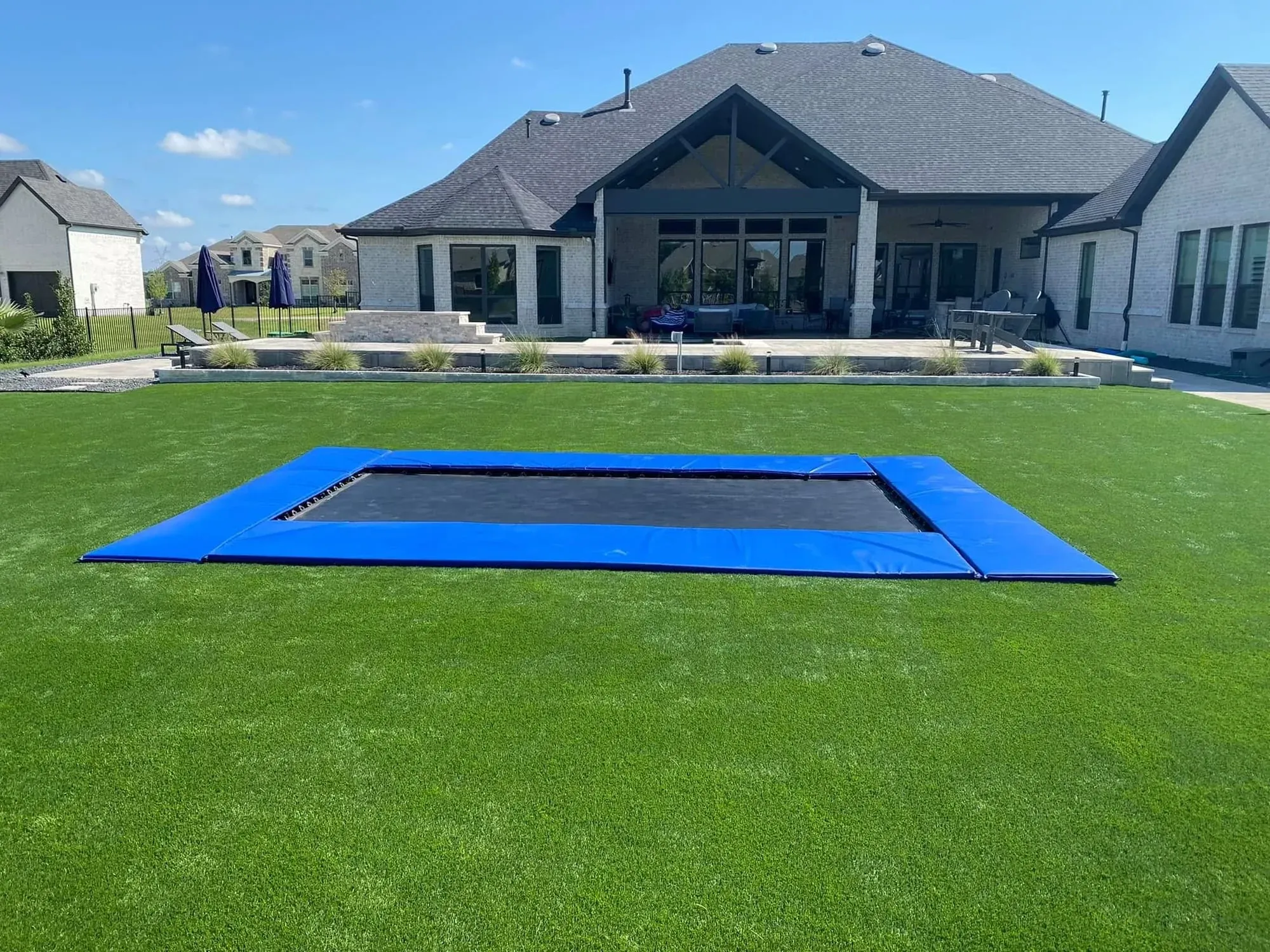
Every landing shoves the air under the mat somewhere. Above ground it leaves sideways between the legs. In a pit the only ways out are up through the mat and the pads. If neither lets it pass, the bounce goes dead and the pads slap and lift with each jump.
Akrobat describes its mat as 70 percent open and says the added ventilation prevents pad lifting and cuts noise. Avyna says its open mat passes up to 70 percent more air than a regular one. North and Capital Play perforate the pads. An above-ground trampoline has a tight mat and solid pads, one more reason it jumps poorly in a hole.
What goes wrong in the pits I get called to fix
I have been in hundreds of trampoline pits, counting my own installs and other people's that needed repair, and I often fix other contractors' pump work. Nearly every failure starts with water.
I have yet to see a snake in any trampoline pit after being in hundreds of them. Mosquitoes don't come around because our pits drain. Standing water is what brings them, and it is hard on a cheap steel frame too.
- No pump and no pipe, only gravel: the pit turns into a pond after the first wet week
- A pump with no check valve, or a drain line that ends uphill: the water comes straight back
- No power planned for the pump, so it runs off a cord that somebody unplugs
- A $300 trampoline in the ground: the frame corrodes, the pads weather and it does not bounce well
- Dirt backfilled loose against the wall: the edge settles and the trampoline sinks on one side
- Turf or sod laid first, then torn up by the excavator on the way in

Questions people ask next.
Don't see yours? Text it to me or try the full list of 60.
Why does an inground trampoline pit fill with water in North Texas?
Blackland Prairie clay lets water through very slowly, so rain that reaches the pit stays there. The USDA rates Houston Black clay as very slow to drain and high in runoff. Without a pump or a downhill pipe, the water has no way out.
Is a gravel base enough drainage for an inground trampoline in clay?
No, a gravel base alone is not enough in clay. Gravel gives water a place to sit below the frame, but the clay around it will not carry the water away. Add a pipe to lower ground or an electric sump pump.
Can a French drain replace the sump pump?
Not on my jobs. Every pit I build gets a sump pump and a drain, because I cannot warranty a pit without a pump on continuous power. A 4 inch pipe to a lower point needs an outlet below the pit floor, and most flat lots have none.
Who calls 811 before an inground trampoline dig?
On my jobs, you do. Call 811 or file at texas811.org, then send me the ticket reference number. Utilities are marked within 48 hours, two business days, and the request is free. Private lines such as sprinklers are generally not marked, so those get found on the walkthrough.
Is the soil different on the west side of Dallas–Fort Worth?
Yes. The Cross Timbers belt on the Southlake side has sandy or sandy loam topsoil, according to Texas Parks and Wildlife, and it digs and drains easier than black clay. There is often clay below it, so I still install a pump and drain line there.
Where does the dirt from the pit go?
Most of my jobs reuse the dirt on site. Several yards come out of a trampoline pit, and a yard with some slope gives us a place to use it. Whatever cannot stay gets hauled at $600 a load.
Takes about a minute
Get my price
A few taps and you'll see a real number wherever I publish one. No home visit to find out.