
Trampolines, HOAs and home insurance in Texas
Texas law settles neither question: the HOA answer is in papers filed with your county, and the insurance answer is in your policy.
- Written for North Texas yards
- 5.0 from 237 Google reviews
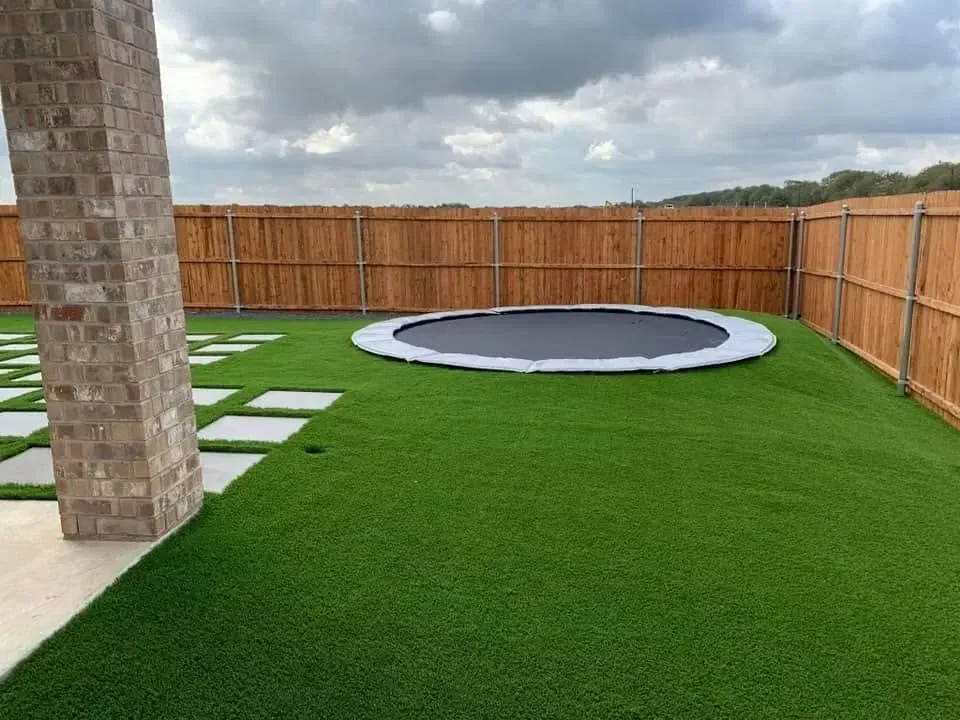
Home insurers in Texas each set their own trampoline rule: some cover it, some cover it only with conditions such as a net or a fenced yard, and some exclude it. No state law protects or bans a backyard trampoline, so an HOA's answer comes from its recorded declaration and design guidelines. Ask your agent before you buy. I can give your committee the sizes.
- 10 business daysWhat an association has to deliver its restrictions, rules and a resale certificate after a written request, under Property Code 207.003
- 30 daysTo ask the board for a hearing after an architectural denial, in associations of more than 40 lots, under Property Code 209.00505
- High riskHow the Texas Department of Insurance describes a trampoline, in the same sentence as a swimming pool
Who to ask, what to ask and what you are looking for
Six places hold the answer. The first four are about the HOA and the last two are about insurance. Get every answer in writing.
| Document or person | What to ask or search for | What you are looking for |
|---|---|---|
| Declaration (CC&Rs or deed restrictions) | Pull it from the county clerk's real property records or the association website. Search for trampoline, play equipment, recreational equipment, structure and improvement. | A sentence that bans it, limits where it sits, or requires approval before any improvement goes in the yard. |
| Design or architectural guidelines | Ask the management company for the current version and the application form. Search for height, screening and visible from the street. | A height limit, a distance from the fence or lot line, and a rule on what may show above the fence. |
| Management company or board | Ask by email if an above-ground trampoline in a fenced backyard needs an application, and if an inground one does. | A written answer with a name and a date on it. |
| Resale certificate packet | If you are buying the house, request the restrictions, the rules and the resale certificate before closing. | The same trampoline and play equipment wording, read before the yard is yours. |
| Insurance agent | Ask the questions in the checklist on this page. | One of three answers: covered, covered with conditions, or excluded. Plus what it does to your premium. |
| Your policy and its endorsements | Search the liability section and every endorsement for trampoline and recreational equipment. | An exclusion by name, or a condition such as a net enclosure or a fenced yard. |
This is a reading list and not legal or insurance advice. Only your own documents, your association and your insurance company can tell you what applies to your address.
Questions to ask your insurance agent before you buy
Send these by email so the answers come back in writing. Ask before the trampoline arrives, not after.
- Does my liability coverage apply if a guest is hurt on a trampoline at my house?
- Is there a trampoline exclusion or endorsement on my policy, and can you send me the wording?
- Do you require a net enclosure, pads, a fenced yard or a locked gate for coverage to apply?
- Is an inground trampoline treated the same as an above-ground one, and does it need a net?
- What does adding a trampoline do to my premium?
- Could having a trampoline lead to my policy being cancelled or not renewed?
- If a storm throws the trampoline into my fence or a neighbor's house, which part of my policy responds?
- Does anything change if I add an umbrella policy?
Rather not do it yourself? Text me a photo and I'll text back a firm price.
Texas law leaves trampolines to your HOA documents
Chapter 202 of the Texas Property Code is where the state tells property owners' associations what they cannot ban. The Texas State Law Library's guide to restrictive covenants lists protected items including flags, political signs, religious displays, solar energy devices and rain barrels. Trampolines and play equipment are not in the chapter.
So the rule for your street is whatever your subdivision recorded. The same guide says an owner may need approval from an architectural review committee before making changes or additions to a property, and that the committee's powers are almost always defined in the declaration. Two neighborhoods a mile apart can answer the same trampoline differently.
I am not a lawyer, and I cannot tell you what your documents allow. I can show you which pages to read and help with the sizes a committee asks for.
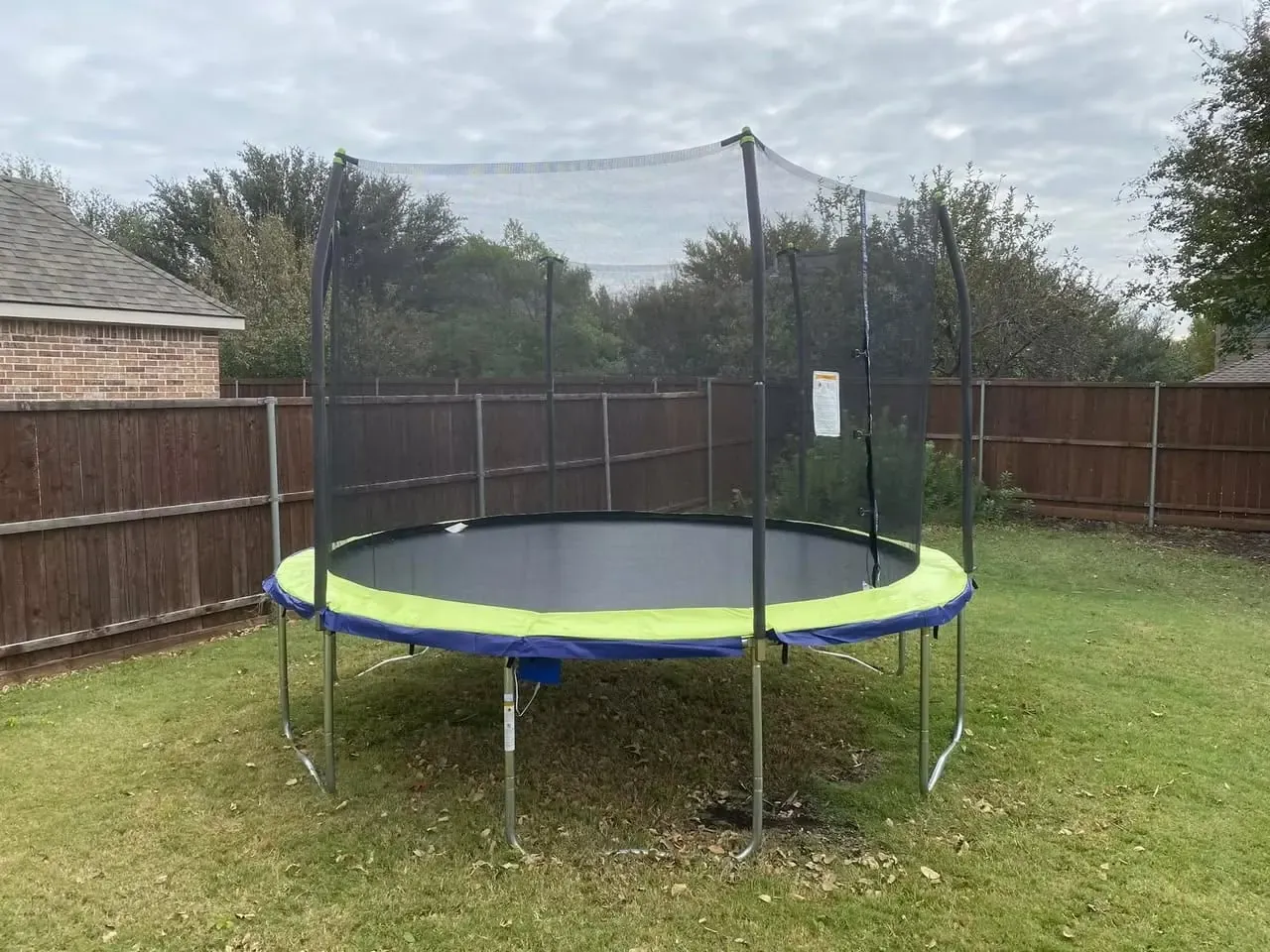
Pull these documents before you pick a trampoline
Start with the declaration. Section 202.006 requires an association to file its dedicatory instruments in the real property records of each county where the subdivision sits, and says an instrument has no effect until it is filed. Pull the declaration and every amendment from the county clerk's real property records, the copy nobody can argue with.
Two routes are quicker. Under Section 207.006, an association with at least 60 lots, or one that has hired a management company, has to keep the current filed documents on a website its members can reach. Under Section 207.003, a written request gets an owner the current restrictions, the bylaws and rules, and a resale certificate within 10 business days. Buyers can ask too, before closing.
Many of these documents never use the word trampoline. Search the PDF for play equipment, recreational equipment, structure and improvement, then for visible from the street, screening and height. Note each section number for your request.
What an architectural application usually asks for
Some homeowners never ask. Those who do usually submit paperwork showing where the trampoline will go, and I help them gather the details and sizes. Each association has its own form, and the list below is what committees commonly want. A property survey or an easement sometimes says where a job can or cannot go, so pull your survey before you pick the spot.
After a no, state law gives owners in larger neighborhoods a process. Section 209.00505 applies to associations of more than 40 lots once the developer no longer controls the committee. A denial has to be delivered in writing, describe the reason in reasonable detail and list any changes that would get approval. The owner then has until the 30th day after the notice was mailed to ask the board for a hearing, and the board has 30 days from that request to hold it.
Get the approval in writing before anything is ordered, above all for an inground trampoline. The pit is the one part of the job nobody can return.
- Paperwork showing where the trampoline will sit on the lot, which you put together
- The distance from the trampoline to each fence line
- The height, with the net and without it
- The manufacturer's spec sheet with the dimensions
- For an inground model, the size of the pit and how it drains
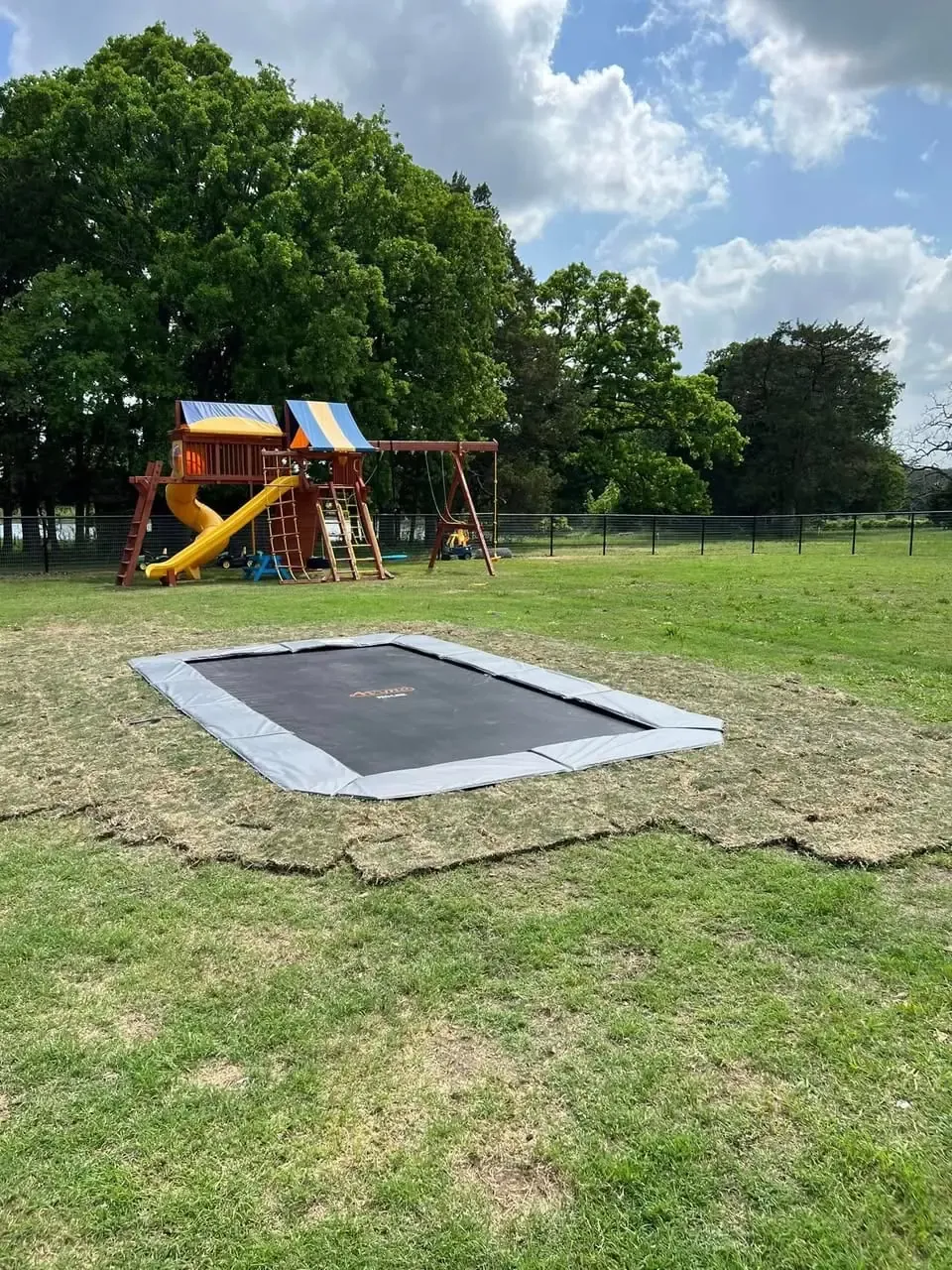
How inground and springless trampolines change the conversation
Committees tend to ask what shows from the street and what is permanent. One large Texas HOA management company's homeowner FAQ says a temporary trampoline in the backyard that can easily be moved normally needs no approval, that one should not go in a front yard, and that one dug into the ground needs the committee to sign off.
An inground trampoline sits flush with the lawn, so without a net nothing shows above the fence line. It is also a permanent change to the lot, with a pit, a drain line and a sump pump. Those pull in opposite directions, so expect to file an application.
A Springfree has no springs or steel at the mat edge, and it is not short. Springfree lists its big models at over 9 feet tall with the net up, 3 feet above a 6 foot fence. If your guidelines limit what shows over the fence, measure before you order. I sell both kinds, and neither comes with a promise of approval.
How home insurers treat a trampoline
The Texas Department of Insurance tells homeowners to let their insurance company know about a trampoline. Its home insurance FAQ calls a trampoline a high risk, in the same sentence as a swimming pool and an aggressive dog.
Insurers that publish an answer describe the same range. American Family says a trampoline may not be automatically covered, that coverage may be available when conditions are met, such as a safety net and a fenced yard with a locking gate, and that other insurers exclude trampolines altogether. Allstate lists three outcomes: no exclusion, coverage only when safety guidelines are followed, or a trampoline exclusion, which can mean the policy is not renewed.
Progressive says some companies exclude trampolines, that the premium may go up once the company knows about one, and that a company could cancel or decline to renew a policy when an owner fails to mention one, and may deny trampoline claims. Its explainer uses the term attractive nuisance for something on a property that can draw children in and put them at risk. What that means for an owner's liability in Texas is a question for a lawyer.
If your company's condition is a net enclosure, ask how that applies to an inground model, because I can add a net to one. And no net, pad or anchor makes a trampoline injury proof. In my experience horseplay causes the injuries, and one jumper at a time is still the golden rule.

Questions people ask next.
Don't see yours? Text it to me or try the full list of 60.
Can an HOA ban trampolines in Texas?
It may be able to. Chapter 202 of the Texas Property Code lists what an association cannot prohibit, and trampolines are not in it. The answer is in your subdivision's recorded declaration and design guidelines, so read both and ask the committee in writing.
Do I need HOA approval for an inground trampoline?
Plan on asking for it. An inground trampoline is a permanent change to the lot, and one large Texas HOA management company says one dug into the ground needs the architectural committee to sign off. Get the answer in writing before a dig date is set.
Where do I find my HOA's rules in Texas?
In the county clerk's real property records, where Property Code 202.006 requires every association to file them. An association with 60 or more lots or a management company must also post them on a members' website. A written request gets you the restrictions and rules within 10 business days.
Does homeowners insurance cover a trampoline in Texas?
That depends on your company and your policy. Insurers that publish an answer say a trampoline may be covered, covered only with conditions such as a net or a fenced yard, or excluded. The Texas Department of Insurance tells homeowners to let their company know. Ask your agent by email.
Will a trampoline raise my home insurance or get my policy dropped?
It can, according to the insurers themselves. American Family says adding a trampoline may increase a premium. Progressive says the premium may go up, and that a company could cancel or not renew a policy if the owner fails to tell it about a trampoline.
Does a net or an inground trampoline satisfy my insurance company?
Only your company can say. Some insurers list a net enclosure or a fenced yard with a locking gate as conditions for coverage, and each writes its own list. Ask your agent how they treat an inground model. No net or pit makes a trampoline injury proof.
Takes about a minute
Get my price
A few taps and you'll see a real number wherever I publish one. No home visit to find out.